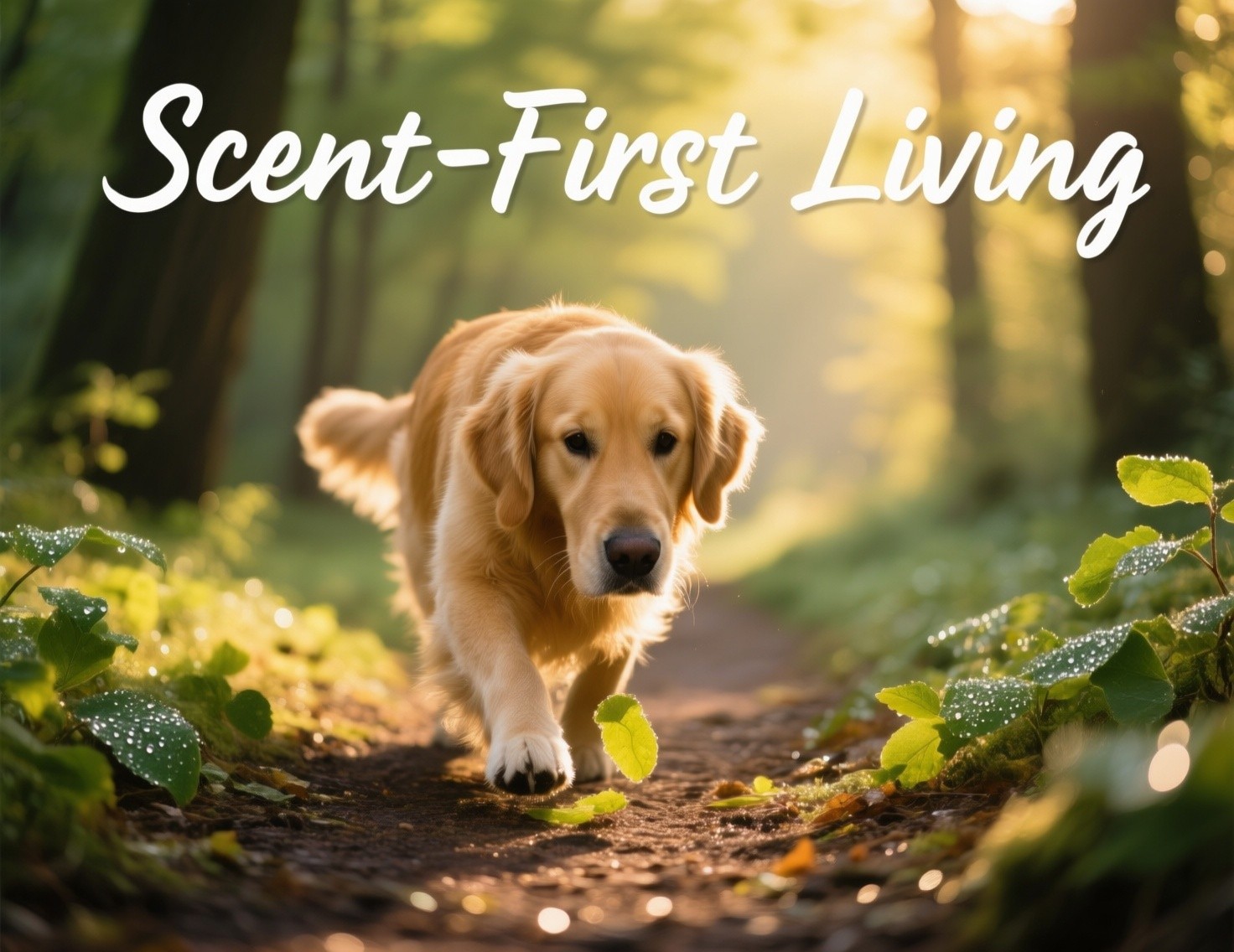
Most dog blogs talk about sit, stay, and fetch. This guide covers a powerful, less-popular topic: decompression walks (“sniffaris”) and at-home nosework. By leaning into your dog’s strongest sense—the nose—you can reduce stress, increase confidence, and enrich daily life, even in small apartments or busy cities.
Table of Contents
- Why Scent Comes First for Dogs
- What Is a Decompression Walk (Sniffari)?
- Evidence-Informed Benefits of Sniffing & Scentwork
- Essential Gear & Safety
- How to Start Decompression Walks (Step-by-Step)
- Urban Sniffaris: Making Scents in the City
- At-Home Scentwork Games (Beginner → Advanced)
- Helping Anxious or Reactive Dogs with Scent
- Common Mistakes & Troubleshooting
- FAQ
- Further Reading & Resources
1) Why Scent Comes First for Dogs
Dogs “see” the world with their noses. While humans are primarily visual, dog brains devote massive real estate to processing odor. Their noses host hundreds of millions of scent receptors—orders of magnitude more than ours—and a specialized structure (the vomeronasal organ) to parse subtle chemical cues. The takeaway: when your dog slows to sniff a fire hydrant for a full minute, they’re not wasting time; they’re reading the neighborhood news.
For a deeper dive into canine scent capability and how dogs use it in sports and working tasks, browse authoritative sources like the AKC Scent Work overview and veterinary behavior content from AVMA Pet Care.
SEO tip: Throughout this article, we’ll use key phrases like decompression walk, sniffari, at-home scentwork, canine enrichment, and scent games for dogs. Use variations naturally in headings, alt text, and image captions.
2) What Is a Decompression Walk (Sniffari)?
A decompression walk—often called a sniffari—is an unhurried outing where the dog sets the pace and chooses where to sniff, within safe boundaries. Unlike brisk “exercise walks,” a sniffari prioritizes information gathering and agency. You’ll use a longer leash or safe off-leash area and give your dog time to investigate grass, trees, bark, rocks, and air currents.
Professional trainers and behavior consultants—see organizations like the IAABC—increasingly recommend decompression walks as a low-cost, high-impact enrichment habit that complements training.
3) Evidence-Informed Benefits of Sniffing & Scentwork
- Natural stress relief: Sniffing is self-reinforcing and can lower arousal. Many behavior pros report calmer post-walk behavior after sniffaris.
- Confidence building: Problem-solving and “hunting” games encourage exploratory behavior and independence.
- Mental fatigue: Ten minutes of focused scentwork can tire some dogs as much as a longer jog, especially in poor weather.
- Choice & control: Allowing dogs to choose what to investigate supports welfare by increasing agency.
- Suitable for all ages: From puppies (gentle, short sessions) to seniors (low-impact enrichment), scentwork scales easily.
Curious about the formal sport side? Explore Intro to Scent Work from AKC and the human-canine enrichment research curated by Fear Free and ASAB.
4) Essential Gear & Safety
Recommended Gear
- Long line (5–10 m): A biothane or webbing long line allows exploration while keeping a physical connection.
- Well-fitted Y-front harness: Distributes pressure away from the neck, enabling comfortable sniffing posture.
- Treat pouch & rewards: Soft treats for reinforcing check-ins and calm behavior.
- Weather-appropriate kit: Water, collapsible bowl, lights/reflectors for low light.
- Poo bags & hand wipes: Responsible, sanitary outings.
Safety Checklist
- Choose quiet routes to minimize triggers for sensitive dogs.
- Scan for hazards: foxtails, broken glass, bait, hot pavement, and wildlife.
- Use a harness + long line; avoid fixed retractables in cluttered spaces.
- Follow local leash laws (check your municipality’s site) and respect wildlife signage.
Need help fitting gear or picking a harness style? The AVMA’s pet care hub and reputable trainers listed at IAABC Consultants can guide you.
5) How to Start Decompression Walks (Step-by-Step)
- Pick your route: Start with a quiet, low-distraction area: a park perimeter, nature trail during off-hours, or a quiet neighborhood loop.
- Gear up: Harness + long line. Attach from the back clip for free movement.
- Set the intention: This is your dog’s time. You’re a guide, not a drill sergeant.
- Adopt the “elastic leash” mindset: Keep a soft “smile” in the line—no constant tension.
- Follow the nose: If your dog wants to sniff the same patch for 60 seconds, let them!
- Mark & reinforce check-ins: When your dog glances back or circles to you, quietly praise and drop a treat near your feet.
- Sprinkle in “consent cues”: Before moving on, ask, “Ready?” If your dog doesn’t follow, wait a beat and try a gentle arc to a new spot.
- Timebox the outing: 10–20 minutes is plenty to start. End while your dog is still enjoying it.
- Decompress at home: Offer water, a sniffy scatter-feed, or a lick mat to transition to rest.
For inspiration on scentwork structure and readiness for formal competition, see the AKC Scent Work rules & resources.
6) Urban Sniffaris: Making Scents in the City
No forest? No problem. City dogs can sniff successfully with a little planning.
- Route hacking: Use alleys, tree-lined side streets, planters, and building setbacks where vegetation collects scents.
- Time of day: Early morning or late evening reduces foot/bike traffic and heat.
- Micro-sniff stops: Pause at tree wells, grass verge strips, or scent-heavy corners for a “mini news scroll.”
- Portable sniffs: Toss a handful of leaves or sticks in a tote to create a quick scent station in a courtyard.
- Indoor alternatives: Underground parking levels or building hallways (if permitted) for slow, sniffy loops during bad weather.
Use local regulations and building rules as your guide; many city parks list dog policies online. For enriching urban routines, browse Fear Free ideas and downloadable tips.
7) At-Home Scentwork Games (Beginner → Advanced)
Beginner: “Scatter & Seek” (5 minutes)
Goal: Encourage nose-down searching in a small area.
- While your dog waits behind a baby gate or with a helper, scatter 10–20 small treats in a 2–3 m area.
- Release with a cheerful cue (“Find it!”).
- Let your dog work; avoid pointing or hovering. Add difficulty by widening the area or using low vegetation.
Beginner: “Box Buffet”
- Gather 6–8 cardboard boxes, egg cartons, or paper bags.
- Place a treat in 3–4 containers; leave others empty for “blanks.”
- Set them out randomly; cue “Search!” and let your dog explore.
- Rotate boxes weekly; vary heights and textures.
Intermediate: “Trail of Breadcrumbs”
- Lay a short treat trail down a hallway ending in a small jackpot hidden under a paper cup.
- Each session, make the trail sparser and the jackpot slightly harder to access (lightly crumpled paper, then a cardboard sleeve).
Intermediate: “Scent Cones in the Wind”
Outdoors, toss a treat into light vegetation with the wind at your back so odor plumes ahead of your dog. Encourage them to quarter (zig-zag) across the breeze to source the odor.
Advanced: “Target Odor Intro”
If you want to mirror formal nosework, you can introduce neutral “target odors” like birch, anise, or clove following ethical training guidelines. Learn about sport structures and handling from the AKC’s intro to Scent Work and consult a qualified trainer (IAABC directory).
Advanced: “Room-to-Room Search”
- With your dog briefly out of sight, place 2–3 hides (treats or toy in a ventilated tin) across two rooms.
- Add one empty room as a blank search area to promote persistence without constant reinforcement.
- Switch hide heights: floor-level, knee-high, and slightly above nose level to build vertical hunting.
Trainer Tip: Keep sessions short (3–5 minutes), end with a win, and record where you placed hides to avoid frustration.
8) Helping Anxious or Reactive Dogs with Scent
Scent-first routines are not a cure-all, but they can be a framework for calmer behavior.
- Pre-walk pattern: Start with a 1–2 minute scatter-feed in the yard or lobby to promote nose-down, slow breathing.
- Distance is your friend: Choose routes with visual barriers; use parked cars, hedges, or alleyways to detour before triggers spike arousal.
- Alternate behaviors: Reinforce “Find It,” “Look at That” (LAT), or “Let’s Go” U-turns when surprises pop up.
- Post-walk decompression: Lick mats, sniffy snuffle mats, or a calm chew to settle after a big information download.
For behavior professionals and more structured protocols, see the IAABC and education from Fear Free. If your dog shows signs of severe anxiety or aggression, speak with your veterinarian; they can refer you to a board-certified veterinary behaviorist.
9) Common Mistakes & Troubleshooting
Mistake: Walking too fast
Fix: Slow down and grant sniffing windows. Think “meander,” not marathon.
Mistake: Tight leash pressure
Fix: Manage the long line with hand-over-hand slips to keep a soft drape. Practice in a low-distraction area first.
Mistake: Over-prompting (“It’s over here!”)
Fix: Let your dog do the work. Step back, resist pointing, and celebrate true finds.
Mistake: Too hard, too soon
Fix: Scale difficulty. Increase only one variable at a time: area size, number of hides, height, or the presence of blanks.
Mistake: Ignoring body language
Fix: Learn early stress signals—lip licks, yawns, scanning, sudden stillness—and adjust. The AVMA has general welfare and handling guidance; local trainers can help decode subtle signals.
10) Sniffari & Scentwork FAQ
How often should I do decompression walks?
Even 2–3 sniffaris per week can help many dogs. Daily is great if your schedule and environment allow. Short, high-quality sniff time beats long, rushed walks.
Do I need special equipment?
Not really—just a safe harness and a long line. A snuffle mat, cardboard boxes, and recycled containers cover most indoor games.
Can senior dogs or puppies do scentwork?
Yes. Keep sessions gentle and short, and adjust hide heights for mobility. Always consult your vet if your dog has health concerns or mobility limitations.
Is sniffing dirty ground safe?
Generally yes with sensible hygiene. Avoid obvious hazards and consider wiping muzzles or paws after city sniffaris. Keep vaccines and parasite preventives current—ask your veterinarian for guidance (AVMA Pet Care).
Will scentwork make my dog more “prey-driven”?
Properly structured searches channel instinct into controlled, rewarding tasks. Most dogs relax after scentwork because they’ve satisfied a deep behavioral need.
Can this help with leash reactivity?
Scentwork alone won’t resolve complex behavior issues, but it’s a powerful adjunct. Combine decompression walks with distance management and reward-based training; consult a qualified pro via the IAABC directory.
11) Further Reading & Resources
- AKC Scent Work: Sports, rules, and getting started
- AKC: Intro to Scent Work
- IAABC (International Association of Animal Behavior Consultants)
- Find a behavior consultant (IAABC)
- Fear Free Pets: Enrichment & behavior resources
- AVMA Pet Owner Resources
- DACVB: Board-Certified Veterinary Behaviorists
Image & Media Suggestions (Optional)
- Feature image: Dog on a long line sniffing tall grass. Alt: “Dog on decompression walk (sniffari) using a long leash.”
- Inline image: Close-up of a dog’s nose. Alt: “Dog nose macro illustrating scent detection.”
- Short video clip: 15–30 seconds of “Find it!” scatter-feed to demonstrate nose-down behavior.
On-Page SEO Checklist for This Article
- Target keyword: decompression walk, sniffari, scentwork for dogs, scent games for dogs, canine enrichment.
- URL slug:
/dog-sniffari-decompression-walks-scentwork-guide/ - Title tag (≤60 chars): “Sniffaris: Decompression Walks & Home Scentwork Guide”
- Meta description (≤155 chars): “Science-backed decompression walks and scent games to calm, enrich, and tire your dog—anywhere.”
- H1: Matches target phrase (see above).
- H2/H3s: Include semantic variations like “urban sniffari,” “scent games,” “nosework training.”
- Internal links: Link to your existing posts on harness fitting, enrichment toys, loose-leash walking, and anxiety management.
- External links: Point to authoritative orgs (AKC, IAABC, AVMA, DACVB).
- Image alts: Include keywords naturally; avoid stuffing.
- Schema: Add FAQPage JSON-LD below.
FAQ Schema (JSON-LD)
Quick Reference: 7-Day Scent-First Starter Plan
Use this to turn ideas into action.
- Day 1: 10-minute sniffari in a quiet spot + “Scatter & Seek.”
- Day 2: Box Buffet indoors + 15-minute meander around tree wells.
- Day 3: Trail of Breadcrumbs + early-morning micro-sniffs at planters.
- Day 4: Rest day or very gentle courtyard sniff; add lick mat after.
- Day 5: Scent Cones in the Wind + reinforce check-ins on long line.
- Day 6: Room-to-Room Search with one blank room; short celebratory play.
- Day 7: Urban sniffari during off-hours; finish with calm chew at home.
Downloadable Checklist (Optional to add as a WP reusable block)
- Harness fits; no rubbing behind front legs
- Long line attached to back clip
- Quiet route chosen; low traffic
- Treat pouch stocked
- Water + collapsible bowl
- Headlamp/reflectors if dim
- Poo bags, wipes
- End session on a win
Final Thoughts
The most underused enrichment tool is already on your dog’s face. When you shift from mileage to meaning—from laps to sniffs—you’ll notice calmer behavior, better sleep, and a happier companion. Whether you live near forests or downtown sidewalks, decompression walks and simple scent games can reinvent your routine.
Credits & Authoritative Links
For readers who want to go deeper or find professional support:
- AKC Scent Work — sport structure, target odors, trial basics
- AKC: Intro to Scent Work — beginner guidance
- IAABC — professional standards and behavior articles
- Find a qualified trainer/consultant
- Fear Free Pets — low-stress handling, enrichment ideas
- AVMA Pet Owner Resources — veterinary-authored care and safety
- DACVB — find a veterinary behaviorist